The AI wave has been here for the past 5 to 7 years and everyone is experimenting with this to utilize in business workflow. Companies ran pilot projects, tested chatbots, and built proof-of-concepts. But in 2026, it has changed and we know as Singularity experts are working on many projects that are directly impacting business workflow and outcomes.
From supply chains and customer service to finance and marketing, organizations are embedding AI directly into their core operations. This shift is not about hype anymore. It is about measurable efficiency, faster decisions, and real cost savings.
The Numbers Tell the Story
The adoption numbers are striking. In late 2025, about 10 percent of businesses reported using AI in producing goods or services, double the rate from just a year earlier. Among larger enterprises, the numbers are even higher. One study found that 96 percent of IT leaders have integrated AI into their core business processes, up from 88 percent the year before. Budgets are growing too. The era of experimentation is ending. The era of execution has begun.
What Is Agentic AI and Why Does It Matter?
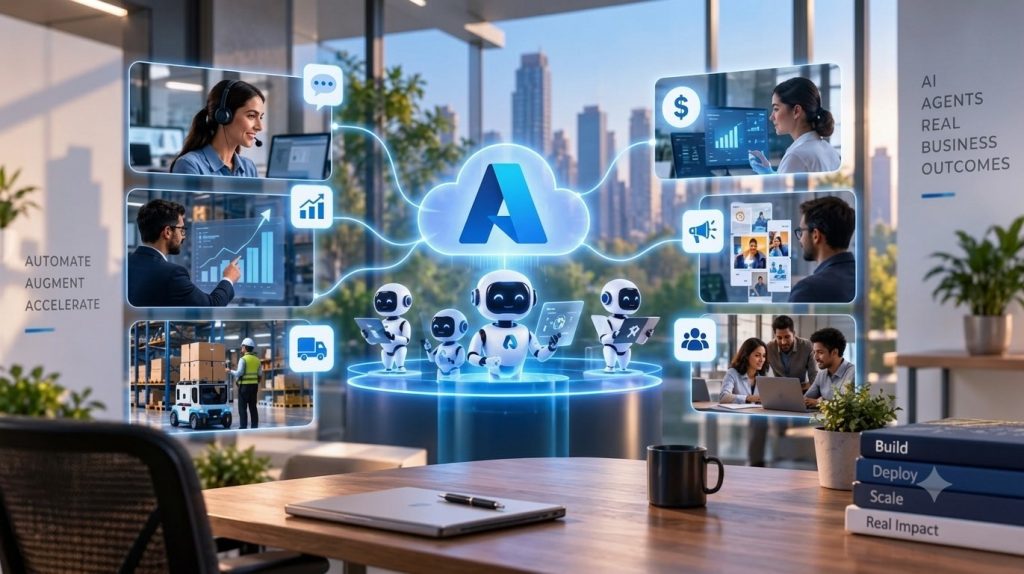
The biggest shift in 2026 is the rise of agentic AI. Unlike earlier AI tools that simply helped employees work faster, agentic systems can autonomously perform complex operational tasks that previously required teams of people. These AI agents do not just suggest actions. They take them.
For example, an AI agent can monitor inventory levels, predict demand, and automatically place replenishment orders without human intervention. Another agent can analyze customer data, identify upsell opportunities, and trigger personalized marketing campaigns. These agents work 24/7, handle routine decisions, and free up human workers for higher-value strategic work.
How Agentic AI Differs from Traditional Automation
Traditional automation followed rigid rules. If X happens, do Y. It was predictable but inflexible.
Agentic AI is different. It learns from data, adapts to changing conditions, and makes decisions based on context. A rule-based system might send a standard email reminder. An AI agent might analyze a customer’s purchase history, engagement patterns, and sentiment before crafting a personalized outreach message. It is automation with intelligence.
Where AI Is Making the Biggest Impact
AI is finding its way into nearly every business function, but a few areas stand out as high-impact.
Customer Service and Support
Customer service is one of the most mature AI use cases. Gartner identified four high-impact areas: assisted agents, customer self-service, automated operational support, and agentic AI across the entire stack.
AI agents now handle routine inquiries, triage complex issues, and even generate knowledge content for support teams. The result is faster resolution times and lower operational costs.
Supply Chain and Logistics
Supply chains are benefiting enormously from AI. Non-generative AI tools are reducing the time employees spend on tasks, with 89 percent of workers reporting a positive effect on their work quality.
Companies are using AI for demand forecasting, inventory optimization, and route planning. Retailers are deploying AI agents to manage pricing, merchandising, and commercial sales processes in real time. The result is leaner operations and fewer stockouts.
Finance and Strategic Analytics
Finance teams are using AI for smarter forecasting, risk assessment, and capital allocation. AI agents can analyze market trends, identify anomalies, and generate financial reports with minimal human input.
Agentic AI adoption is clustering around high-leverage functions like customer insight, product lifecycle management, and strategic analytics. These are not experimental use cases. They are core business functions.
Marketing and Content
Marketing teams are using generative AI to speed up content production. Blog posts, marketing copy, and internal documentation are being generated faster than ever. AI agents are also personalizing customer communications at scale, improving engagement and conversion rates.
Real-World Examples
The shift is happening across industries.
A major Vietnamese dairy company built an AI-powered order coordination system. During a peak shopping festival, the system processed an 18-fold surge in orders compared to a normal day, with ease. The company now saves millions annually through AI-driven efficiency.
Singapore’s largest retailer is deploying a suite of agentic AI applications built on Google’s Gemini platform. These agents assist customers, provide lifestyle advice, and recommend products based on real-time data.
These are not tech companies. They are traditional businesses using AI to run better operations.
The Benefits Are Clear
Why are companies making this investment? The returns are becoming undeniable. Ninety percent of business leaders expect a revenue boost of at least 25 percent from agent-based automation within three years. More than half of executives reporting increased revenue cite 6 to 10 percent revenue growth from generative AI.
Beyond revenue, AI delivers operational efficiency. It shortens cycle times, automates handoffs, and reduces manual coordination. It also improves decision quality by providing real-time insights that humans might miss.
The Challenges You Cannot Ignore
Of course, AI in business operations is not without its hurdles. Data quality remains a top concern. AI models are only as good as the data they learn from. If your underlying data is messy or incomplete, your AI agents will make bad decisions.
Workforce reluctance is another issue. Employees may fear that AI will replace their jobs. The reality is different. The shift is not about reducing headcount but about expanding customer reach and increasing throughput by pairing human workers with AI agents. Still, change management and training are essential.
Security and compliance are also critical. AI agents have access to sensitive data. Organizations need robust governance frameworks to ensure trust, compliance, and proper oversight.
How Singularity Hypertech Can Help
Implementing AI in business operations is a complex journey. It requires the right data foundation, the right AI models, and the right governance.
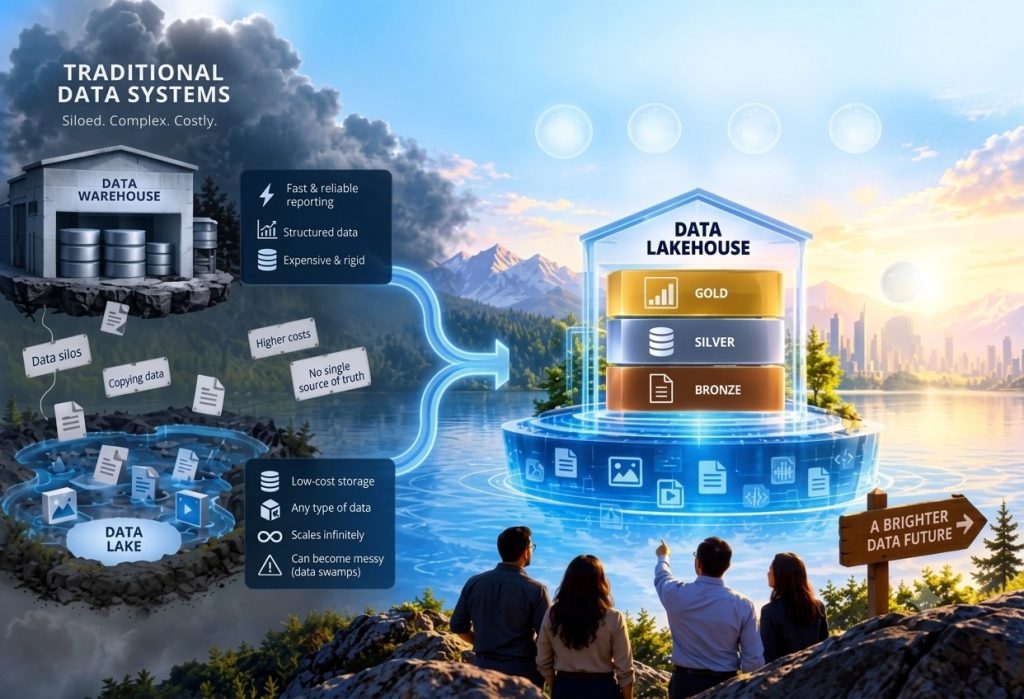
This is where Singularity Hypertech comes in. They specialize in helping enterprises move from AI experimentation to production-grade deployment. Their team understands the data infrastructure needed to power AI agents, from modern data lakehouses to real-time streaming pipelines. They also bring expertise in governance, ensuring your AI initiatives are secure, compliant, and trustworthy.
Singularity Hypertech has guided organizations across retail, finance, and manufacturing through this exact transition. They do not just sell technology. They provide the strategies and hands-on support to make AI actually work for your business.
If you are ready to move beyond pilot projects and embed AI into your daily operations, Singularity Hypertech can help you get there. Reach out today and start building the intelligent, automated business of tomorrow.